
Day 19 — Joy That Overflows
Christian joy isn’t meant to stay inside us.
When God fills us with joy, it naturally begins to overflow—into our expressions, our gratitude, our worship, our conversations, and even the atmosphere around us.
Advent joy isn’t quiet or hidden.
Advent joy is radiant, contagious, and full.
Just as the shepherds “made widely known” the news of Jesus’ birth and the wise men “rejoiced with exceedingly great joy,” true joy overflows.

Day 18 — Joy in Surrender
Surrender is often misunderstood. We think surrender means loss, weakness, or giving up control in a frightening way. But in the kingdom of God, surrender is a pathway to joy.
When we release the things we cannot fix, control, or carry, we make room for God’s peace, God’s strength, and God’s joy.
Advent reminds us that the greatest joy the world has ever known came through complete surrender — Mary’s “yes,” Joseph’s obedience, and Jesus’ humble arrival.

Day 17 — Joy That Strengthens You
Life can drain us—emotionally, mentally, spiritually. There are days when strength feels thin and endurance feels stretched. But Scripture reveals a surprising source of supernatural strength:
The joy of the Lord.
This joy is not forced positivity or pretending everything is fine. It is the deep-rooted confidence that God is good, God is faithful, and God is with us.
Advent reminds us that we are never walking alone—and that God’s joy lifts us in ways our own strength never could.
Day 16 — Joy in the Waiting
Waiting is one of the most challenging places to experience joy. Yet Advent itself is a season built on waiting — waiting for promises, waiting for fulfillment, waiting for the arrival of the Messiah. The people of God waited hundreds of years for Jesus to come… yet their hope did not disappoint them.
Advent reminds us that waiting is not wasted when God is in it.
And because He is with us while we wait, joy is possible even before the answer comes.

Day 15 — Joy to the World: Joy That Comes from His Presence
Advent joy isn’t the kind of joy the world offers. It is not dependent on how much we have, how smoothly life is going, or how festive the season feels.
Advent joy flows from His presence.
When Jesus came, joy entered the world in a new way — joy that is available to every believer, every day. Joy isn’t found in a season; joy is found in a Savior.

Day 14 — The Prince of Peace
As we close this week on peace, we turn our eyes to the heart of Advent:
Jesus Himself is our Peace.
He does not merely offer peace as a feeling, a moment of calm, or a temporary relief.
Peace is part of His identity — who He is, not just what He does.
When Jesus came into the world, peace entered the world embodied in a Person.

Day 13 — Peace That Guards the Heart
God’s peace is not only comforting — it is protective.
Paul describes it as a guard, standing watch over your heart and mind. In a world filled with stress, negativity, fear, and emotional pressure, God does not leave your inner life unprotected.
His peace is a shield.
Advent reminds us that Jesus came to bring not just salvation for eternity, but peace for our daily battles.

Day 12 — Peace in God’s Provision
Provision is one of the deepest places where our peace gets tested. Whether it’s financial pressure, emotional needs, or uncertainty about the future, anxiety often rises when we don’t see how things are going to work out.
But Advent reminds us of this truth:
God always provides — not always the way we expect, but always the way we need.
The same God who provided a Savior in a manger will surely meet you in your present need.

Day 11 — Peace with Others
Advent is a season of peace — not just peace within us, but peace between us. When Jesus was born, the angels proclaimed, “Peace on earth, goodwill toward men.” His coming restored peace between God and humanity, and now He empowers us to carry that same peace into our relationships.
Relational peace is one of the greatest gifts we give and receive during this season.

Day 10 — Peace in Our Decisions
One of the most beautiful gifts God gives us is peace as guidance. In Colossians, Paul tells us to let the peace of Christ rule in our hearts. The word rule means “to act like an umpire” — to make the call, to determine which direction is safe or right.
God’s peace is not only comforting; it is clarifying.
When our minds feel scattered or we stand at a crossroads, His peace becomes the gentle voice that directs our steps.
Day 9 — Peace in the Storm
Storms are a part of life—unexpected trials, emotional turbulence, or seasons where everything feels out of control. In Mark 4, the disciples faced a physical storm so fierce they thought they would drown. But Jesus stood up and spoke three simple words:
“Peace, be still.”
And creation obeyed.
Advent reminds us that Jesus did not come to remove us from storms, but to step into them with us, carrying a peace stronger than any wind or wave.
Day 8 — Peace for the Anxious
Peace is not something we stumble into—it is something God gives when our minds and hearts are anchored in Him. Isaiah describes “perfect peace,” a peace so complete that it shields the heart even when life is chaotic.
This kind of peace is not fragile.
It doesn’t break under pressure.
It doesn’t disappear when circumstances shift.
Perfect peace is a promise.

Day 7 — Hope in God’s Timing
One of the hardest parts of hope is trusting God’s timing. We want answers quickly. We want clarity now. We want breakthrough on our schedule. But Scripture teaches a deeper truth:
Your times are in God’s hands — and His timing is perfect.
Advent itself is a season of waiting, reminding us that God’s promises often unfold slowly, beautifully, and right on time.

Day 6 — Hope for the Brokenhearted
Advent is often portrayed as a joyful season, yet for many, it can stir deep emotions—grief, loneliness, disappointment, or memories of painful seasons. Scripture offers profound comfort: God draws nearest to those whose hearts are hurting. He isn’t distant from sorrow; He steps right into it.
Hope isn’t the absence of heartbreak.
Hope is God’s presence in the midst of it.
Day 5 — Hope for the Weary
Weariness is often a silent burden — the kind that builds slowly until we feel drained, overwhelmed, or emptied out. But God never rebukes the weary; He refreshes them. Isaiah reminds us that God doesn’t just give strength to the strong — He gives strength to the weary.
Hope is not for the energetic or the unburdened.
Hope is for the tired.
Day 4 — Hope When You Feel Discouraged
Even during Advent — a season meant for anticipation and joy — discouragement can creep in. The psalmist understood this tension. He spoke honestly about the heaviness of his soul, but he didn’t stay there. He redirected his heart toward hope.
Discouragement is not failure. It’s an invitation to shift your focus.

Day 3 — Hope in God’s Promises
One of the greatest sources of hope during Advent is the unfailing truth that God keeps His promises. Every prophecy about Jesus’ birth — His lineage, His birthplace, His mission — was fulfilled with precision. Advent invites us to look back on God’s faithfulness so we can face today with renewed confidence.
Hope grows when we remember that God has never failed to do what He said.
Day 2 — Hope in the Waiting
Advent is a season of waiting — something most of us don’t naturally enjoy. But in Scripture, waiting is often the very place where God strengthens, refines, and deepens our hope. The psalmist didn’t wait quietly or passively; he waited with expectation because his hope was rooted in God’s promises, not in circumstances.
Waiting isn’t wasted when it draws us closer to Him.
Day 1 — Advent: A Season of Hope
Advent simply means “coming” or “arrival.” For centuries, Christians around the world have set aside the four weeks leading up to Christmas to remember the first coming of Jesus — the long-awaited Messiah — and to renew our hope as we look forward to His return.
Advent is more than counting down days. It is a season of anticipation, reflection, and preparing our hearts to welcome the Light of the World. The traditional first theme of Advent is Hope, because before Jesus came, God’s people waited in darkness, clinging to the promise that a Savior would one day come.
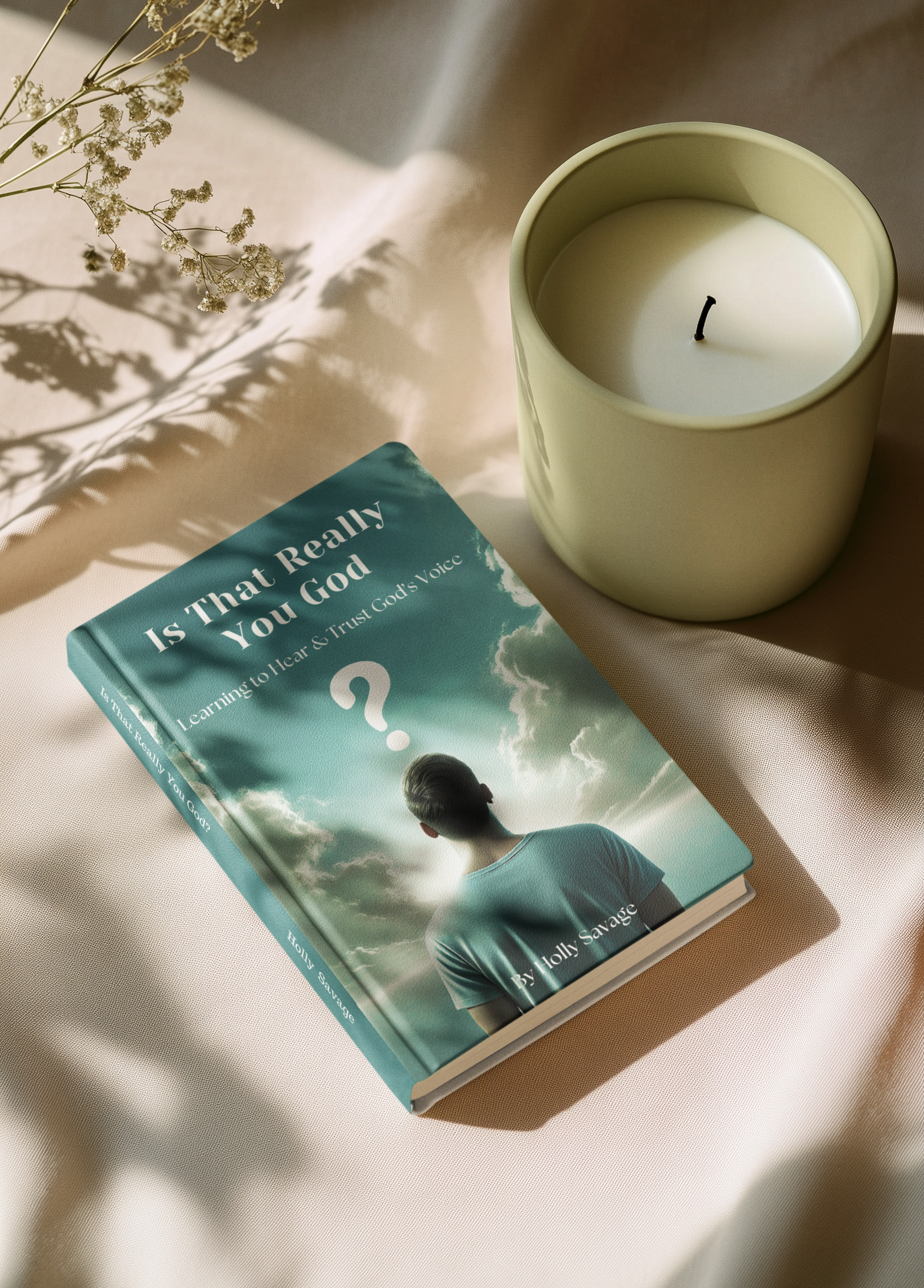
Why God Speaks
The Bible is filled with accounts of God speaking—not just to kings and prophets, but to ordinary people in everyday situations. The truth is, God speaks because He desires a relationship with us.
In John 10:27, Jesus says, “My sheep hear my voice, and I know them, and they follow me.” This verse illustrates two essential truths: first, that God is speaking, and second, that we as His followers can recognize His voice. Just as a shepherd knows his sheep intimately and the sheep recognize their shepherd’s voice, God knows each of us personally, and He desires that we recognize His voice among all the others.